
Known as one of the superfoods of the Himalayan region, Chhurpi is now recognised internationally for its uniqueness and benefits. Centuries ago, the yak-herding communities (Sikkim, Arunachal Pradesh, and Ladakh) needed a way to preserve the high-energy benefits of milk without it spoiling. Then, the traditional way of making and storing Chhurpi came into existence. The magic lies in its storage method, which yields near-zero moisture content and makes it a true ‘survival food’ in the mountains.
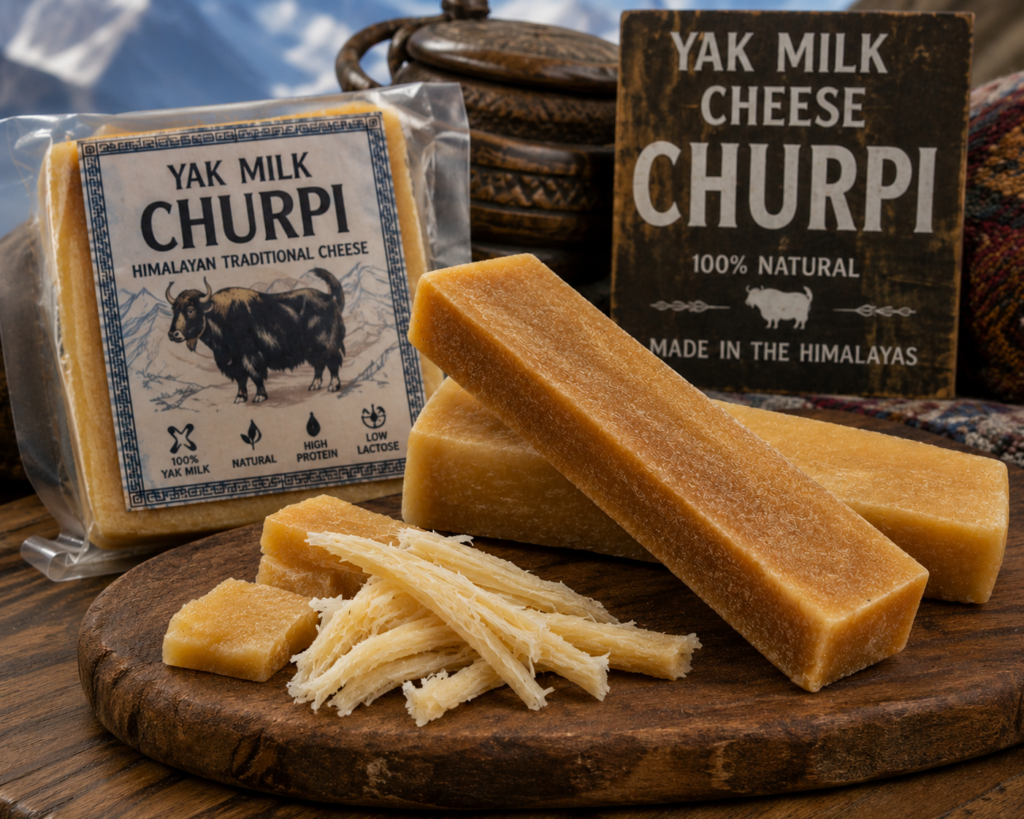
Tradition and Science behind CHHURPI
An authentic Chhurpi is prepared from the yak milk or Chauri (a yak-cow crossbreed). Compared to standard cow milk, yak milk has higher fat and protein. After boiling the milk, the solids are separated using lemon juice, vinegar, or buttermilk. Then the solid obtained is wrapped in jute bags and pressed under heavy stones to remove all the moisture. Over a kitchen hearth (the AGUN), these cheese blocks are hung. The smoke from the woodfires acts as a natural preservative. It provides Chhurpi a mountainside aroma.
Chhurpi contains 60%-70% protein as the moisture is removed. Also, it is rich in Omega-3 fatty acids and CLA (Conjugated Linoleic Acid), which support heart health and help burn body fat, generating more heat in the freezing temperatures. Chhurpi is considered Lactose-friendly because, during the fermentation and aging, most of the lactose breaks down, making it digestible for lactose-intolerant folks. Chewing on hard Chhurpi produces saliva, which helps to hydrate and keep the mouth moist during long journeys.
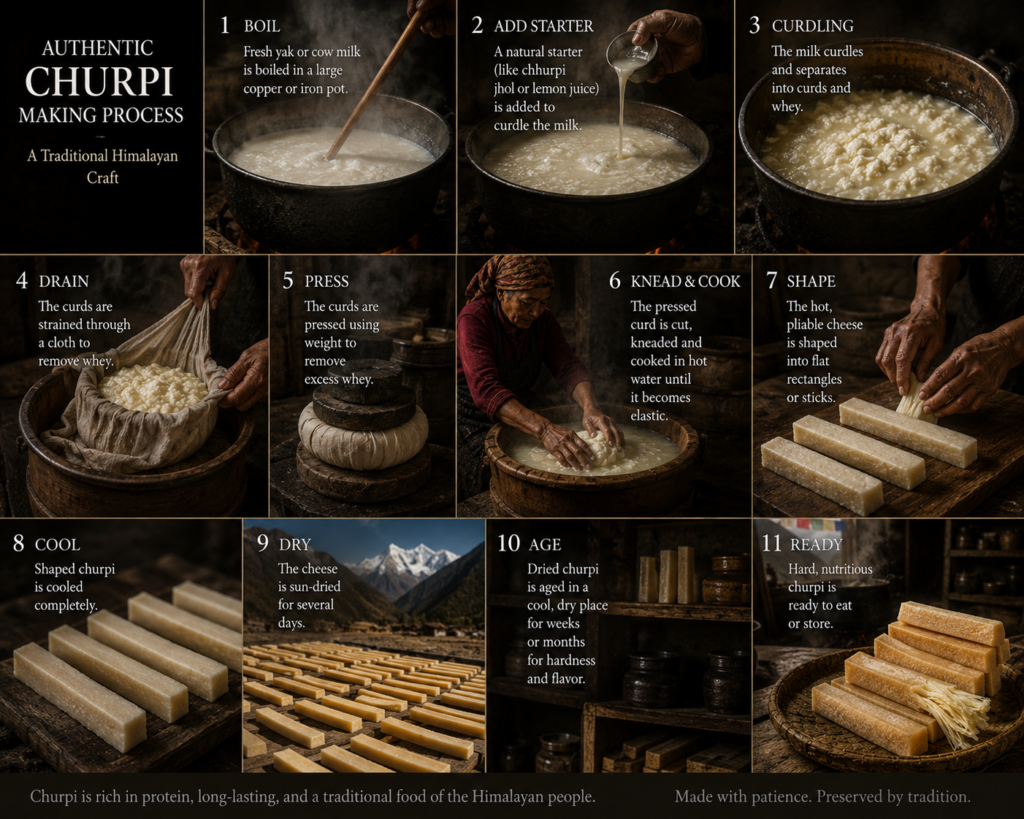
The Architecture of a Chhurpi Cube
On noticing carefully, it can be seen that a Chhurpi cube is designed for durability. On the outer layer, it is a dark, smoked exterior, which creates a protective skin to prevent mold. On the inner side, it is dense and crystalline. It can be stored for almost 20 years at room temperature. The making of Chhurpi involves a zero-waste concept, where every byproduct of the milk is utilized to the fullest. There are two kinds of Chhurpi: soft and hard. The hard chhurpi is the most fascinating product as it involves patience and chemistry.
The Storage: The 20-Year Shelf Life
The Chhurpi is traditionally stored in a wooden box in households and kept in the dry corner of the kitchen. In some families, the Chhurpi is directly hung above the stove. The warmth of the smoke prevents molds in monsoon seasons. Like wine, Chhurpi gets better with age. After 10 years, Chhurpi becomes darker and develops a more intense flavour.
How to Eat Stored Chhurpi?
Chhurpi is very hard to bite. There are different methods to enjoy this superfood.
1. Keep it in the mouth. The saliva softens the outer layer, which then gently gets scraped away. One cube of Chhurpi lasts up to 30-45 minutes.
2. The stored Chhurpi is soaked in warm milk or water for several hours to bring back its texture. Then it is used in stir-fries, soups, or other dishes.
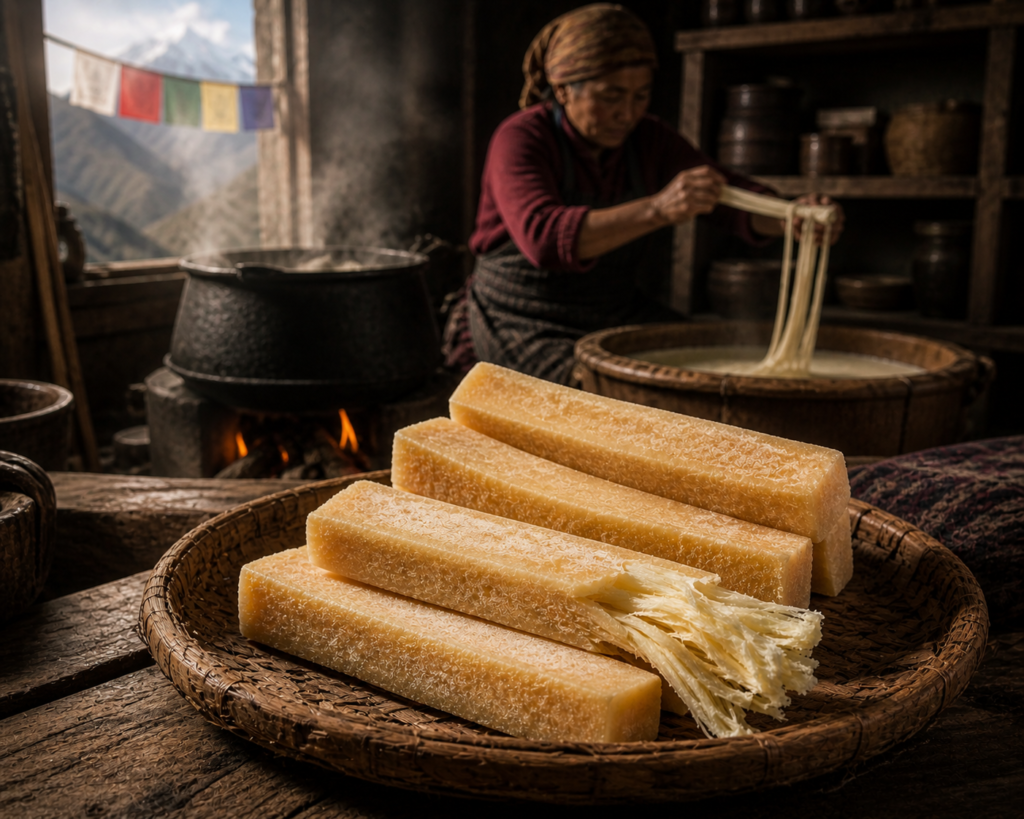
FUN FACT
In 2026, CHHURPI won the gold medal at the World Cheese Championship in Brazil.
With its outstanding history, one can easily understand why Chhurpi is known as one of the superfoods of the Himalayan region. The texture, taste, and properties of Chhurpi make it a unique yet sustainable food. Chhurpi is a culturally rich food, and now the global recognition has brought it to its utmost popularity. When visiting the Himalayan region, don’t forget to try this special cheese.
HAPPY EATING!!